My Kids Started Fighting and I Heard My Sister's Voice Come Out of My Mouth
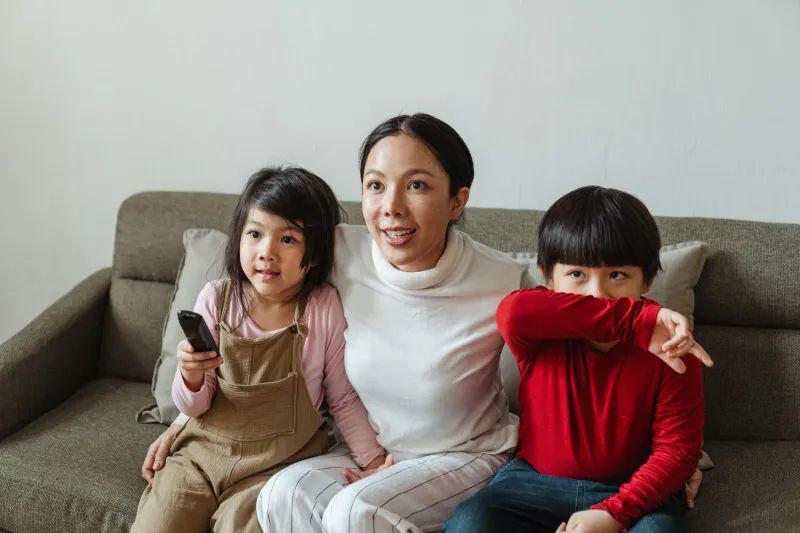
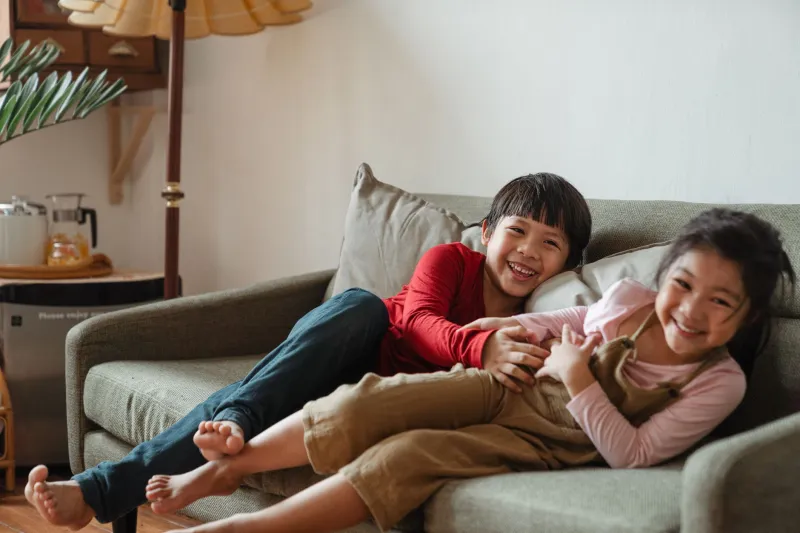
It was a Tuesday night. Nothing special about it — dinner was done, homework was (allegedly) finished, and my two kids had settled onto the living room floor with Monopoly. I was half-watching from the kitchen, loading the dishwasher, feeling like a reasonably functional parent.
Then it started.
My older one accused the younger one of cheating. The younger one denied it, loudly. Voices rose. A game piece hit the carpet. And before I even registered what was happening, I was standing in the middle of the room saying something I hadn't planned to say — something sharp, something that landed harder than I meant it to.
I told my older kid to stop always making everything a competition.
The room got quiet in that particular way it does when a parent has said too much. And I stood there feeling a familiar heat in my chest that had nothing to do with the argument in front of me.
Because I wasn't just talking to my kid.
The Reaction That Didn't Belong to the Moment
I've been doing this parenting thing long enough to know that when your response feels bigger than the situation, it's usually about something else entirely. But knowing that in theory and catching yourself in real time are two very different things.
I grew up with a sister who was, by most external measures, the easier kid. Quieter. More agreeable. Better at school without seeming to try. And I loved her — I still do — but somewhere in the middle of growing up together, I had internalized this story that I was the difficult one, the one who pushed too hard, the one who made things tense.
I thought I'd dealt with that. I'd talked about it in therapy years ago. I'd had honest conversations with my sister as adults. I genuinely believed I'd filed it away somewhere and moved on.
That Tuesday night, the file cabinet fell over.
What I Was Actually Reacting To
When I accused my older child of "always making everything a competition," I wasn't describing my kid. I was describing the version of myself I'd been told I was at their age.
That's the part that stopped me cold.
I had unconsciously cast my children into roles I recognized — and I was reacting to those roles, not to the actual people standing in front of me. My older kid wasn't me. My younger kid wasn't my sister. But in that heated moment, my nervous system had decided otherwise, and my mouth had followed along without asking my brain first.
This is the sneaky thing about unresolved family stuff. It doesn't announce itself. It doesn't wait for a calm moment when you're journaling or going for a walk. It shows up in the middle of a Monopoly game on a Tuesday, wearing the face of your children.
The Harder Conversation I Had to Have — With Myself
After I sent the kids to cool off in their rooms, I sat down at the kitchen table and just... stayed with it. Not the argument. The feeling underneath it.
I had to ask myself some uncomfortable questions. Was I over-protecting my younger child the way someone had over-protected my sister? Was I quicker to side with one kid over the other, and if so, why? Had I been unconsciously replicating a dynamic I'd spent years resenting?
The honest answers weren't flattering.
I wasn't doing it maliciously. That's the thing nobody tells you — most of the harm we accidentally pass down doesn't come from bad intentions. It comes from autopilot. It comes from the deeply grooved patterns that got laid down in our own childhoods before we had any say in the matter.
Recognizing the pattern is step one. But recognition doesn't automatically change behavior. You have to actually interrupt it, every single time, until the new response becomes the groove.
What Breaking the Cycle Actually Looks Like
I went back to both of my kids that night and apologized — not for intervening, but for the way I'd done it. I told my older one that what I said wasn't fair, and that I'd been reacting to something that had nothing to do with them.
My kid looked at me like I'd grown a second head. Kids aren't used to parents owning their stuff out loud. But I watched something visibly relax in their face, and that was worth the awkwardness.
Since then, I've tried to build in a beat before I react to their fighting. Not a long pause — just enough space to ask myself: Is this about them, or is this about something older? Sometimes it's genuinely about them and I respond accordingly. But more often than I'd like to admit, there's something older underneath it.
I've also started being more intentional about not casting my kids in fixed roles. They aren't "the competitive one" and "the easy one." They're two people still figuring out how to exist alongside each other — which, honestly, is exactly what my sister and I were doing too, all those years ago.
The Gift Hidden in the Hard Moment
Here's what I didn't expect: watching my kids navigate their relationship has actually given me more compassion for my younger self. Seeing how much effort it takes to share space, to feel seen, to not always be the one who gets blamed — it's made me softer toward the kid I used to be.
And it's made me more curious about my sister's experience too. We've had a couple of conversations recently that went deeper than our usual check-ins. Not dramatic, not heavy — just more honest. More willing to say hey, that was hard for me too.
Sibling relationships in childhood are often the first place we learn about fairness, competition, belonging, and love. They shape us in ways that don't always show up until decades later — sometimes in the middle of a board game, on an ordinary Tuesday night, when you least expect it.
If your kids' fighting is hitting you somewhere deeper than it should, it might be worth getting curious about why. Not to spiral into guilt, but to gently ask what's still unfinished.
Chances are, your kids aren't just fighting with each other. They might be handing you something you needed to look at all along.