The Conversations That Changed Us Happened in the Cereal Aisle
I Was Always Saving It for Later
For a long time, I operated under this unspoken rule: real connection required a real occasion. I'd plan the big talk, schedule the family meeting, set aside a Saturday afternoon for quality time. I'd light the metaphorical candles. I'd prepare.
And then the moment would arrive and my kids would be distracted, or tired, or just not in the mood. And I'd feel this quiet defeat, like I'd bought tickets to a show that got canceled.
What I didn't realize — and it took me embarrassingly long to figure this out — is that my kids weren't waiting for the special occasion. They were already talking. Just not to the version of me who was trying so hard.
They were talking to the me who was half-paying attention in the car. The me who was squinting at a grocery list. The me who was folding laundry on autopilot and actually had nothing better to do than listen.
The Grocery Store Became a Confessional
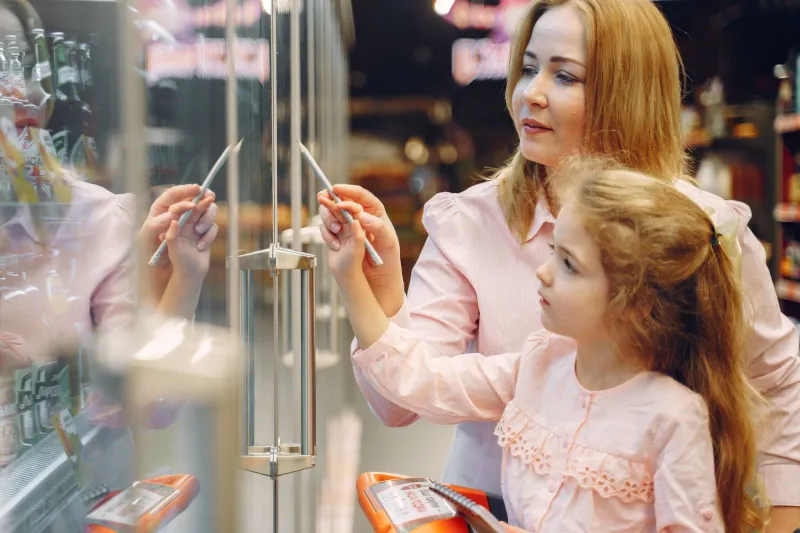
It started on a Wednesday. Nothing special about it. I needed to grab a few things before dinner and my younger one, Maya, asked if she could come. I almost said no — it would be faster alone, I told myself. But I said yes.
By the time we hit the cereal aisle, she was telling me about a fight with her best friend. Not a summarized version. The whole thing. The text messages, the lunch table situation, who said what and who looked at who. She talked for eleven minutes straight. I timed it because I was so stunned I didn't know what else to do.
I hadn't asked. I hadn't prompted her with a carefully worded check-in question. I was just there, holding a box of Cheerios, and she just... talked.
Something unlocked that day that I've been trying to understand ever since.
Why the Boring Stuff Works
I've thought about this a lot, and here's my best theory: unglamorous tasks lower the stakes for everyone.
When a parent sits a child down and says let's talk, there's a pressure that fills the room. It signals that something serious is happening, that the right words matter, that the outcome is being evaluated. Kids — especially tweens and teenagers — pick up on that energy immediately. They brace.
But when you're both just trying to find matching socks or figure out if the milk is still good? Nobody's bracing. Nobody's performing. The task absorbs the awkwardness. And in that space, real things get said.
There's actually research that supports this. Side-by-side activities — where two people are engaged in something together but not directly facing each other — tend to produce more honest conversation than face-to-face settings. Eye contact can feel interrogative. Shared focus on something neutral feels safe.
My kids aren't thinking about that. They just know that something feels easier in the car or at the sink. I'm the one who had to learn to stop fighting it.
The Activities That Opened the Door
Once I started paying attention, I noticed it wasn't random. Certain activities kept coming up as the ones where things got real.
Car rides are the undisputed champion. Something about being in motion, not facing each other, with a built-in endpoint — it's the perfect container for a conversation that might otherwise feel too big. My oldest has told me things during twenty-minute drives that I don't think he'd ever have said across a dinner table.
Cooking together is another one. Especially when the recipe is forgiving and nobody's stressed about it. Chopping vegetables gives hands something to do, which apparently frees up mouths to say things they've been sitting on.
Folding laundry sounds almost too mundane to mention, but it's worked more than once in our house. There's a rhythm to it. And rhythm, I've learned, loosens people up.
Evening walks — even short ones — have become a quiet ritual I protect. No destination, no agenda. Just movement and whatever comes up.
None of these are revolutionary. That's kind of the whole point.
What I Had to Give Up to Get Here
Honestly? I had to give up the idea that I was owed a certain kind of connection moment. The sit-down, the eye contact, the tidy resolution where we both feel heard and everything gets wrapped up nicely.
My kids don't communicate in that format. They never did. I just kept trying to make them.
I also had to give up multitasking during the mundane stretches. That was harder than it sounds. My instinct when we're doing something routine is to also check my phone, run through my to-do list, half-watch something. Being fully present while loading the dishwasher felt almost inefficient at first.
But I started noticing that the moments I showed up distracted, the conversation dried up fast. And the moments I put everything down and just existed in the task with them? That's when something would shift.
They notice. Kids always notice.
Saying Yes to the Ordinary
Now I try to say yes when one of them wants to tag along somewhere boring. Yes to the hardware store run. Yes to the post office. Yes to helping carry in the groceries even when it would technically be faster without them.
Because I've learned that boring, for a kid, sometimes just means safe. And safe is where they'll tell you the things they actually need you to hear.
I'm not going to pretend every errand ends in some breakthrough moment. Sometimes we just buy cereal and go home. But sometimes we don't.
And I'd rather be available for the sometimes than be perfectly prepared for a moment that never quite arrives.